- Free Consultation: (888) 883-6588 Tap Here To Call Us




Privilege Destruction: When AI Turns Confidential Communications Into Discoverable Evidence


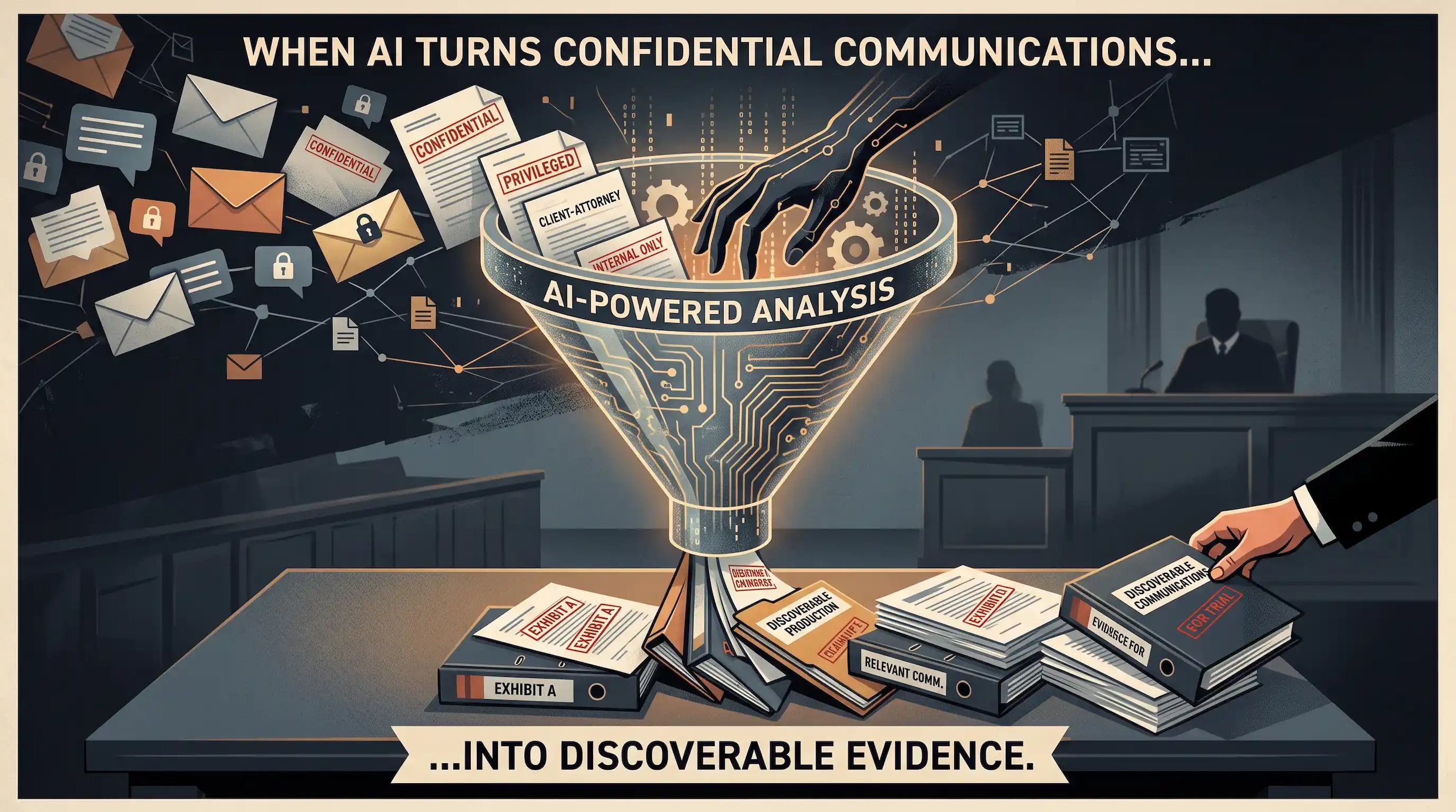
Artificial intelligence is quickly changing how businesses, employees, attorneys, HR professionals, and claims administrators handle information. AI tools can summarize documents, draft messages, analyze records, organize evidence, and create reports in seconds. While these features are convenient, they also bring new legal risks. A key concern is attorney-client privilege and attorney work product protections.
Many people think their communications are protected just because a document is marked “confidential” or stored securely. But employees uploading legal communications, litigation materials, personnel files, or sensitive workplace documents into third-party AI systems can create privilege issues that did not exist before AI became common.
For employees dealing with leave-of-absence disputes, disability accommodations, retaliation claims, Family and Medical Leave Act issues, California Family Rights Act disputes, or wrongful termination cases, keeping information confidential is crucial. Mishandling privileged information can expose sensitive communications to discovery requests, legal challenges, and disputes over evidence.
A Practical Example Of How This Plays Out
Consider an employee who receives a denial of a Family and Medical Leave Act request and, hoping to understand her options before contacting an attorney, uploads the denial letter and her physician’s certification into a free consumer AI chatbot and asks it to evaluate her case.
She has now placed medical information, her employer’s internal correspondence, and her own assessment of a potential claim into a system operated by a company with no attorney-client relationship to her and no obligation of confidentiality.
If she later retains counsel and litigation follows, opposing counsel may seek records of that AI interaction through discovery, and her own words describing the dispute (written before she had legal advice) could become evidence used against her position. The same risk applies to a supervisor who feeds a disciplinary write-up into a public AI tool to help draft a termination letter, or an HR manager who summarizes an internal harassment complaint using a consumer-grade AI assistant.
None of these actions involve bad intent, but each can create a discoverable record that did not previously exist. The same might be said for an employer’s use of AI to conduct internal investigations or use of AI to develop responses to reasonable requests for accommodation.
Understanding Attorney-Client Privilege
Attorney-client privilege is one of the most important legal protections recognized under California law. California Evidence Code § 950-962 establish protections for confidential communications between attorneys and clients.
The purpose of attorney-client privilege is to encourage candid communications regarding legal advice. Privilege generally protects communications made in confidence between a client and legal counsel for the purpose of obtaining or providing legal advice.
Privilege protection can be lost or weakened if confidential information is shared with third parties. This rule has been in place long before artificial intelligence became common in business.
AI technology raises new questions about whether sharing information with outside software providers counts as sharing with a third party for privilege purposes.
Attorney Work Product Protections Face Similar Risks
California also protects attorney work product. California Code of Civil Procedure § 2018.030 provides protection for attorney impressions, conclusions, opinions, legal theories, and litigation preparation materials.
Work product often includes case evaluations, witness credibility assessments, legal research, litigation strategies, interview summaries, and attorney notes.
Many AI platforms are built to review, summarize, sort, and analyze documents. When litigation materials are uploaded to outside systems, there may be concerns about whether work product protections still apply.
These concerns become particularly important when employment litigation involves leave of absence disputes, disability discrimination claims, retaliation allegations, or wrongful termination actions.
Why AI Platforms Create New Legal Questions
Traditional legal communications generally remain within a defined circle of participants. AI systems often introduce additional parties into the process.
Many AI vendors keep information on remote servers, process data using outside systems, and have contract rights over information shared on their platforms. Depending on the terms of service, uploaded content might be kept, reviewed, analyzed, or used to improve their systems.
Courts are increasingly examining whether disclosure of privileged information to AI providers may constitute disclosure to third parties. While legal standards continue to evolve, uncertainty alone creates substantial risk.
A communication does not automatically remain privileged simply because confidentiality was intended.
Enterprise AI Platforms Versus Consumer AI Tools
Not all AI tools carry the same level of legal risk. Consumer-facing AI products intended for general public use typically operate under broad terms of service that may permit the vendor to retain submitted content, use it to improve or train underlying models, or grant staff or automated systems access to it.
Enterprise and business-tier AI platforms, by contrast, are frequently governed by separate contractual terms that restrict the vendor’s use of submitted data, prohibit training on customer content, and impose confidentiality and security obligations similar to those found in other professional services agreements.
This distinction matters for privilege analysis because courts examining waiver often ask whether the disclosing party took reasonable steps to preserve confidentiality and whether the recipient was bound by any duty of confidentiality. A consumer AI tool with no contractual confidentiality protections looks, to a court, much like handing a privileged document to a stranger.
An enterprise platform operating under a signed data protection agreement, with contractual prohibitions on model training and defined data retention limits, presents a materially different set of facts — and the vendor agreement itself becomes part of the evidence a court will weigh.
Employment Leave Cases Often Involve Sensitive Information
California leave-of-absence disputes often involve very confidential records. These cases may include medical documents, accommodation requests, doctor certifications, personnel files, internal complaints, disciplinary records, and legal evaluations. California statutes govern employee leave rights, including the California Family Rights Act found in Government Code § 12945.2 and disability accommodation protections under the California Fair Employment and Housing Act, Government Code § 12940.
Employment disputes under these laws often involve a lot of communication between employees, attorneys, healthcare providers, and employers. When AI systems process these materials, privilege and privacy concerns may arise simultaneously.
Human Resources Investigations And AI Risks
Many employers now use artificial intelligence to help with workplace investigations and internal reviews.
AI tools can summarize witness interviews, organize discrimination complaints, analyze misconduct claims, and prepare investigation reports. While these tools can make things more efficient, they may also raise privilege concerns if confidential information is sent to outside vendors.
An employer might think an investigation is still protected by attorney-client privilege. But if privileged communications go through third-party AI systems, there may be questions about whether those protections still apply. These concerns can become especially important during the discovery phase of a lawsuit.
Confidential Employment Records And Data Exposure
Leave of absence disputes often require reviewing a lot of employment records.
Examples include:
- Medical leave requests.
- Accommodation documentation.
- Physician certifications.
- Human resources communications.
- Performance evaluations.
- Internal complaint records.
- Investigation materials.
When these documents are uploaded to AI platforms, questions often come up about data retention, storage practices, vendor access, and how the information might be used in the future.
Organizations should understand where information is stored, how long it is retained, who can access it, and whether uploaded content may be used for future model training.
Discoverability Concerns During Litigation
One of the most significant risks involves discoverability.
A document that was previously protected may become the subject of discovery disputes if privilege protections are challenged. Opposing counsel may argue that disclosure to an AI provider waived privilege protections.
California law addresses inadvertent waiver of privilege in specific circumstances. Evidence Code § 912 provides that privilege is waived when the holder discloses a significant part of the communication or consents to disclosure by another, unless the disclosure is itself privileged or otherwise protected.
Courts have also recognized that disclosures made without an intent to waive privilege, where reasonable steps were taken to prevent and promptly address the disclosure, may not result in waiver (an analysis often described as the inadvertent disclosure doctrine). Applying that framework to AI use raises new factual questions:
Was the AI platform selected and configured with confidentiality in mind? Did the user take steps to limit the information entered? Was disclosure to the AI vendor itself intentional, incidental, or the product of a misunderstanding about how the tool operates? These questions are largely untested in the AI context, which is precisely why courts examining them are doing so case-by-case rather than under settled rules.
Courts evaluating these disputes may consider several factors, including:
- The nature of the AI platform.
- Contractual confidentiality provisions.
- Vendor access rights.
- Data storage practices.
- Retention policies.
- The circumstances surrounding disclosure.
Because legal standards continue to develop, uncertainty remains a significant concern.
Privacy Issues Beyond Privilege
Privilege concerns are only part of the analysis.
California recognizes strong privacy protections under Article I, Section 1 of the California Constitution. Employment leave disputes frequently involve medical information, disability records, mental health information, and other highly personal data.
Even if privilege remains intact, privacy issues may still arise when sensitive information is transferred to external systems.
Employees involved in leave-related disputes may understandably have concerns regarding who can access confidential information and how long that information remains available.
Best Practices For Protecting Sensitive Information
Artificial intelligence is likely to remain a permanent part of workplace operations and litigation management. As a result, organizations, attorneys, and employees must carefully evaluate how
AI tools are used.
Important considerations often include:
- Reviewing vendor agreements.
- Understanding retention policies.
- Evaluating confidentiality provisions.
- Assessing security protections.
- Limiting disclosure of sensitive information.
- Determining whether AI processing is necessary.
Careful planning can help reduce legal risks while preserving confidentiality protections.
The State Bar of California addressed some of these concerns directly in its Practical Guidance for the Use of Generative Artificial Intelligence in the Practice of Law, issued in November 2023.
That guidance reminds attorneys of their duties of confidentiality and competence when using AI tools, and cautions that entering confidential or privileged information into AI products without understanding the vendor’s data handling practices may implicate an attorney’s ethical obligations under the Rules of Professional Conduct.
While the guidance is directed at attorneys, its underlying caution (understand how a tool handles your information before you use it), applies with equal force to employers, HR professionals, and employees navigating leave-of-absence and other employment disputes.
The Growing Importance Of AI Governance
Courts, regulators, employers, and attorneys continue to evaluate the legal consequences of artificial intelligence. As AI adoption expands, privilege disputes involving confidential employment information will likely become more common.
Leave of absence litigation frequently involves substantial amounts of sensitive information. Protecting privileged communications and confidential records remains critical throughout the claims process.
Understanding the legal implications of AI-assisted document review, transcription, analysis, and storage has become increasingly important for both employees and organizations.
Leave-Of-Absence Frequently Asked Questions
Can Attorney-Client Privilege Be Lost By Uploading Documents Into An AI Platform?
Potentially. Courts may examine whether disclosure of confidential communications to a third-party AI provider affects privilege protections. The outcome may depend on the platform, contractual terms, data handling practices, and specific facts involved.
What Is Attorney Work Product?
Attorney work product generally includes legal strategies, attorney impressions, case evaluations, witness assessments, research, and litigation preparation materials. California Code of Civil Procedure § 2018.030 provides important protections for these materials.
Why Are Leave Of Absence Cases Particularly Sensitive?
Leave of absence disputes often involve medical information, disability documentation, accommodation requests, physician certifications, and personnel records. These materials frequently contain highly confidential information.
Can Human Resources Investigations Create Privilege Problems When AI Is Used?
Yes. If confidential investigations are processed through third-party AI systems, questions may arise regarding privilege protections, confidentiality, and discoverability.
What Information Is Commonly At Risk?
Attorney communications, demand letters, witness statements, litigation strategies, personnel records, medical documentation, internal complaints, investigation materials, and legal analyses may all present concerns.
Why Do Vendor Agreements Matter?
Vendor agreements often define access rights, storage practices, confidentiality obligations, retention periods, and data usage provisions. These terms may affect legal risk assessments.
Can AI Systems Retain Uploaded Information?
Many AI systems maintain data retention policies. The length of retention and permitted uses vary significantly depending on the provider and contractual terms.
Does California Law Protect Employee Privacy?
Yes. California provides significant privacy protections through constitutional provisions and various statutory protections. Privacy concerns frequently arise when sensitive employment information is shared with external systems.
Contact Law Office Of Joseph Richards, P.C. To Discuss Your Legal Options
Artificial intelligence is creating new legal challenges involving privilege, confidentiality, privacy rights, and employment litigation. Leave of absence disputes often involve highly sensitive information that requires careful handling. Questions regarding attorney-client privilege, attorney work product protections, AI processing, and data disclosure deserve careful legal evaluation. Law Office of Joseph Richards, P.C. represents employees throughout California in matters involving leave-of-absence violations, disability accommodation disputes, retaliation claims, and related employment law issues.
Questions involving leave-of-absence violations, confidential employment records, privilege disputes, or artificial intelligence-related disclosure concerns may significantly affect employment claims. Contact our Orange County employment lawyer today by calling (888) 883-6588 to receive your free consultation and take the first step toward justice. Law Office of Joseph Richards, P.C. represents employees throughout the State of California.
Our Offices

STE 202
Anaheim, CA 92807

STE 120
Corona, CA 92881

Los Angeles, CA 90045

Sacramento, CA 95825