- Free Consultation: (888) 883-6588 Tap Here To Call Us



The Hidden Algorithm: How AI-Generated Scores Are Secretly Getting California Workers Fired


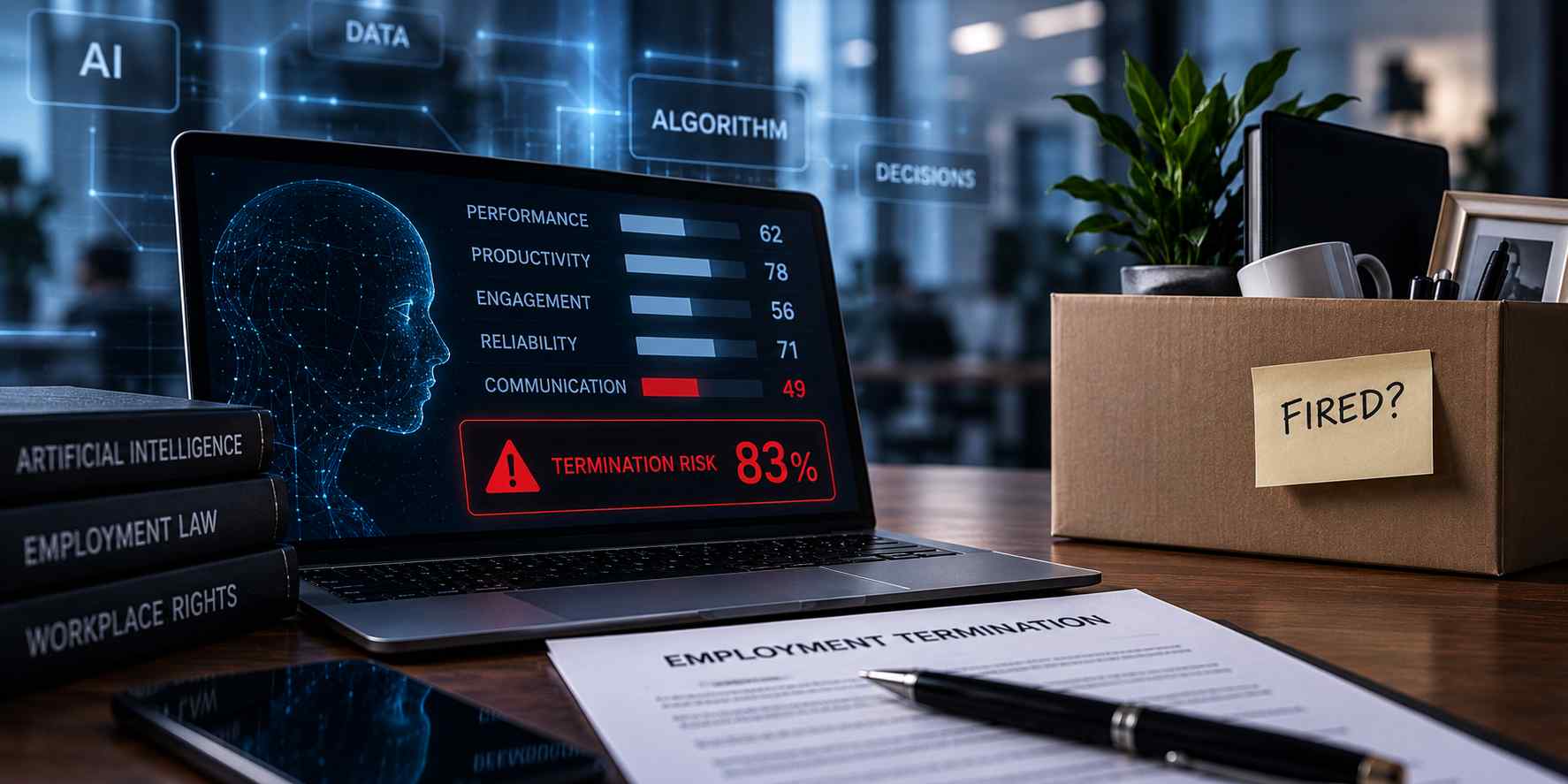
A worker might lose their job without realizing that software played a role in the decision. More employers now use automated systems to track things like attendance, productivity, scheduling, sales, customer service, and workplace behavior. While a computer-generated score can seem fair, it may be based on incomplete data, wrong assumptions, or standards that unfairly impact workers protected by California law. Problems can happen if an algorithm counts protected medical leave, disability absences, or pregnancy accommodations as signs of poor reliability or low productivity. California law now clearly states that artificial intelligence and automated decision systems can cause employment discrimination, even if it is the software, not just a manager, making the recommendation.
California Employment Law Now Directly Addresses Automated Decision Systems
California’s employment discrimination regulations expressly address automated-decision systems used in employment decisions. California Civil Rights Department regulations governing automated-decision systems became effective October 1, 2025. California defines such systems broadly enough to cover computational processes that make decisions or facilitate human decision-making regarding applicants or employees. The regulations clarify that use of artificial intelligence, algorithms, machine learning, or similar technologies can violate the Fair Employment and Housing Act when a system discriminates against an applicant or employee because of a protected characteristic.
So, an employer cannot avoid responsibility just by saying that software created the score.
A decision to fire someone is still an employment decision, even if software is involved. If an automated system marks a disabled employee as unreliable because protected medical absences lowered their attendance score, FEHA can still apply. The same issues can come up if software screens workers based on patterns linked to sex, pregnancy, age, race, disability, medical condition, or other protected traits.
California’s regulations also require covered employment records, including automated-decision system data, to be maintained for at least four years. That requirement can become important when a fired worker later challenges how a score was generated.
A Neutral-Looking Score Can Still Produce Illegal Discrimination
An algorithm does not need to contain an openly discriminatory instruction to create a legal problem.
California’s regulations recognize adverse impact, sometimes called disparate impact. A facially neutral employment practice can violate FEHA when the practice disproportionately limits, screens out, ranks, or disadvantages a protected group without adequate legal justification. Automated scoring systems fall within that analysis.
Think about an attendance system that takes away points each time someone misses a shift. It might look like everyone is treated the same, but there is a big problem if protected disability leave, pregnancy leave, or family leave is treated just like an unexcused absence.
Productivity algorithms can cause similar issues. For example, software might only count time spent logged into a workstation and ignore approved disability accommodations that change job duties. A scheduling system could also penalize someone for having less availability because of protected leave.
A computer might treat all data the same way, but California law looks at whether the employment practice unfairly harms a protected employee or group. protected leave.
California recognizes several forms of protected absence, including qualifying family and medical leave, disability-related leave as a reasonable accommodation, pregnancy-related protections, and paid sick leave in qualifying circumstances.
California’s Fair Employment and Housing Act requires covered employers to provide reasonable accommodation for a known physical or mental disability unless accommodation would impose an undue hardship. Leave can qualify as a reasonable accommodation in appropriate circumstances. Employers also have an obligation to participate in a timely, good-faith interactive process when accommodation may be needed.
Government Code § 12940 prohibits disability discrimination and also establishes reasonable accommodation and interactive-process duties. An algorithm that automatically lowers a performance or reliability score because a disabled employee used approved accommodation leave may therefore create evidence of unlawful discrimination.
California Family Rights Act protections can create another issue. Government Code § 12945.2 provides qualifying employees with protected family and medical leave under covered circumstances. An employer cannot lawfully transform protected leave into a hidden performance penalty simply because an attendance algorithm was never programmed to distinguish protected absences from ordinary attendance violations. Using automation does not change the legal protections for certain types of leave.
Disability Bias Can Be Built Into Productivity Metrics
AI tools often do more than just track absences. Some also create scores for productivity, engagement, risk, reliability, or performance. These kinds of scores can lead to disability discrimination if the software treats disability-related actions as signs of poor performance.
For example, software might measure typing speed, mouse activity, call volume, physical movement, facial expressions, voice characteristics, response time, or time spent away from a workstation. A worker using an approved accommodation may perform a job differently without performing the essential functions inadequately.
California’s automated-decision regulations specifically recognize another risk. Automated assessments that use tests, questions, games, or similar tools to elicit information concerning disability may constitute unlawful medical inquiries. So, employers should not assume that an AI product is legally safe just because a technology company made it.
Employers Can Remain Responsible For Outside AI Vendors
Many businesses do not develop employment algorithms internally. A third-party vendor may supply applicant-screening software, attendance analytics, productivity monitoring, behavioral assessments, background reports, or termination recommendations.
That does not always protect an employer from FEHA liability.
California’s regulations address agents and third parties involved in automated employment decision-making. California has made clear that existing antidiscrimination obligations continue when automated tools participate in hiring, promotion, discipline, or termination decisions.
The main point is simple: an employer cannot pass off an illegal employment rule to a vendor and then claim they did not know because the vendor’s system made the decision. A worker challenging an AI-assisted termination may need evidence identifying the software, input data, scoring criteria, recommendation provided to management, human review performed, and degree of influence the score had on the final decision.
Hidden Consumer Reports Can Create Another Layer Of Liability
Some algorithmic employment tools may implicate consumer-reporting laws when information comes from an outside company that qualifies as a consumer reporting agency.
The federal Fair Credit Reporting Act, 15 U.S.C. §§ 1681 through 1681x, regulates consumer reports used for employment purposes. Federal law imposes disclosure, authorization, pre-adverse-action, and adverse-action requirements when a covered consumer report influences an employment decision. The Federal Trade Commission explains that an employer taking adverse employment action based on a consumer report must provide required notices, including information allowing the worker to identify the reporting company and dispute inaccurate information.
California adds protections through the Investigative Consumer Reporting Agencies Act.
California Civil Code § 1786.16 generally requires a clear written disclosure and written authorization before an investigative consumer report is obtained for ordinary employment purposes. The disclosure must identify the permissible purpose and provide information concerning the investigative consumer reporting agency. California law also provides a process through which a worker can request a copy of the report.
Civil Code § 1786.12 limits circumstances in which an investigative consumer reporting agency may furnish such a report, including employment-related uses. Whether a particular AI-generated score legally qualifies as a consumer report depends on how the system obtains information, who generates the score, and the purpose for which the information is supplied. Not every internal algorithm falls under consumer-reporting statutes.
An AI Score Based On Bad Data Can Produce A Wrongful Termination
Algorithms depend on input data. Incorrect attendance records, misclassified leave, inaccurate background information, outdated disciplinary entries, incomplete productivity data, or mistaken identity information can produce a damaging score that looks mathematically precise while being factually wrong.
The problem can become worse when managers treat an algorithmic score as objective truth.
An employee might get fired for low productivity, reliability, or risk scores without any explanation of how those scores were calculated. Sometimes, even management does not understand how the system works.
When outside consumer-reporting information contributes to the decision, federal and California laws may create rights to receive information and challenge inaccuracies. When an internal automated system contributes to discrimination, FEHA records and litigation discovery may become important in determining exactly what occurred.
Retaliation Can Be Hidden Inside Automated Performance Systems
Automation can also conceal retaliation. Suppose an employee requests medical leave, reports discrimination, seeks disability accommodation, or complains about unlawful employment practices. Shortly afterward, an automated system begins producing low productivity or attendance scores that management uses to support discipline.
The issue may be whether protected activity was improperly incorporated into the scoring process or whether a manager manipulated inputs, classifications, thresholds, or review criteria.
Government Code § 12940 prohibits retaliation against employees for engaging in activity protected by FEHA. California’s automated-decision regulations do not create a technological exception to that rule. A computer-generated recommendation may still become part of a retaliation claim when protected conduct influenced the inputs or the employer’s use of the score.
The Absence Of Human Review Can Make A Bad System More Dangerous
A common assumption is that human involvement eliminates algorithmic bias. That assumption is not necessarily correct. A supervisor may simply accept the software recommendation. Human review may amount to clicking an approval button. A manager may see only a red warning icon, percentile ranking, or termination recommendation without knowing how protected leave affected the score.
Meaningful review requires understanding enough about the underlying data to identify obvious problems.
California law focuses on the employment decision and discriminatory effect, not merely on whether a human employee appeared somewhere in the process. An automated tool can facilitate a discriminatory decision even when a manager formally makes the final call.
Evidence Can Be Critical After An AI-Assisted Termination
An employee who suspects algorithmic scoring played a role should preserve available employment records lawfully possessed. Relevant material may include performance reviews, attendance records, leave approvals, accommodation communications, disciplinary notices, termination documents, screenshots of performance dashboards, automated warnings, emails discussing scores, and communications identifying outside vendors.
A timeline can also matter.
The timing of protected leave, disability accommodation, complaints, score changes, disciplinary action, and termination may reveal patterns that are difficult to see from a termination notice alone.
California’s four-year record-retention requirement for automated-decision system data may become particularly significant when litigation requires examination of how an algorithm affected an employment decision.
An Algorithm Cannot Override California Employment Rights
Artificial intelligence can assist a business with large amounts of data, but legal responsibility remains attached to employment decisions.
A worker cannot lawfully be discriminated against because software made discriminatory assumptions. Protected leave does not become unprotected merely because an attendance system assigns negative points automatically. Disability accommodation does not become poor performance simply because productivity software fails to account for modified duties.
The central question is often not whether artificial intelligence was used. The more important question is how the system used employment data and whether the resulting decision violated California law.
Contact Law Office Of Joseph Richards, P.C. About A California AI-Related Employment Termination
An unexplained termination based on a low performance score, reliability rating, attendance metric, background assessment, or automated recommendation may involve much more than a routine personnel decision. A hidden algorithm may have relied on inaccurate information, improperly counted protected leave, failed to account for disability accommodation, or produced discriminatory results.
Law Office of Joseph Richards, P.C. represents California workers in employment-law matters involving discrimination, retaliation, leave violations, disability accommodation disputes, wrongful termination, and related workplace claims. A careful review can examine employment records, leave history, accommodation communications, consumer reports, automated scores, disciplinary records, vendor involvement, and the stated reason for termination.
Contact the Orange County employment law attorney at Law Office of Joseph Richards, P.C. by calling (888) 883-6588 to receive your free consultation. Law Office of Joseph Richards, P.C. represents clients throughout the State of California.
Our Offices

STE 202
Anaheim, CA 92807

STE 120
Corona, CA 92881

Los Angeles, CA 90045

Sacramento, CA 95825